Quick Answer: A floor that slopes or bounces in just one room almost always means something specific gave way underneath that exact spot, not the whole foundation. The most common causes are a settling or failed support pier, a rotted or undersized floor joist, or a beam that lost its bearing. Wood framing starts to decay once its moisture content climbs above 30 percent and stays there, according to U.S. Forest Service Forest Products Laboratory research, and it won't decay at all below 20 percent, which is exactly the range crawlspace lumber swings through during a Georgia summer. Clay soil adds a second layer to the problem, since it swells when saturated and shrinks as it dries, a cycle that can tilt a support pier out of level year after year. The right fix depends on which piece failed: sistering a joist, resetting a post, or piering the foundation down to stable soil. A crawlspace inspection is the only way to know which one you're dealing with.
You feel it before you notice it. Walking from the kitchen toward the back bedroom, the floor gives a little under your foot right past the doorway, like there's a patch of give nobody meant to install. Set a marble down near the window and it rolls, slow and steady, toward the same corner every time. The rest of the house feels solid enough. It's just this one stretch, maybe eight or ten feet of hallway or one corner of a bedroom, that moves when the rest of the floor doesn't.
That localized quality is the clue most homeowners miss. A floor that slopes gently across the whole house, inch by inch from front to back, tells a different story than one that dips sharply in a single room while everything around it stays level. The first can be old settling that stabilized decades ago. The second usually means something underneath that one section is actively failing right now, whether that's a support post, a joist, or the soil holding either of them up.
In Hall County and the rest of northeast Georgia, that something is often sitting in a crawlspace nobody has looked at in years. Red clay soil, heavy spring rain, and thick summer humidity all work on the wood and the ground down there long before anyone upstairs ever feels it.
Two Different Failures, One Symptom Upstairs
A bouncy or sloping floor in one part of the house comes down to one of two mechanical problems, and they call for different repairs.
A rotted or undersized joist
Floor joists are the horizontal boards that carry the floor between the foundation walls or the main support beams. When moisture sits against them long enough, the wood softens, loses its strength, and starts to flex under weight it used to hold without a second thought. You feel that as a spring or a bounce right where you're standing, not necessarily a slope. Old rim joists near a crawlspace vent, or joists that run close to damp ground, tend to go first.
A settling or failed support pier
Crawlspaces and basements rely on posts, columns, or piers spaced under the main beams to keep the floor from sagging between the foundation walls. If one of those supports sinks into soft soil, gets knocked loose, or was never set on a proper footing to begin with, the beam above it drops. Everything resting on that beam follows it down, which reads as a slope more than a bounce, though the two often show up together in the same spot.
Why This Shows Up Room by Room, Not Across the Whole House
Floor framing is a series of individual pieces, not one continuous slab, and that's exactly why the damage stays local for a while. A house rests on a run of support piers spaced along the centerline of the crawlspace, and each one carries its own share of the load. One pier can sink into a soft patch of clay while the piers on either side stay put on firmer ground. The joists spanning that section sag. The joists a few feet away, sitting on solid supports, don't move at all.
That's also why the fix doesn't have to mean touching the whole foundation. A single failed pier or a run of a few rotted joists is a contained repair. The trouble is what happens if it sits unaddressed. A sagging beam shifts extra load onto the joists and piers next to it, and what started as one soft spot in a hallway can spread into a slope that reaches the next room within a year or two.
The Clay and Humidity Connection
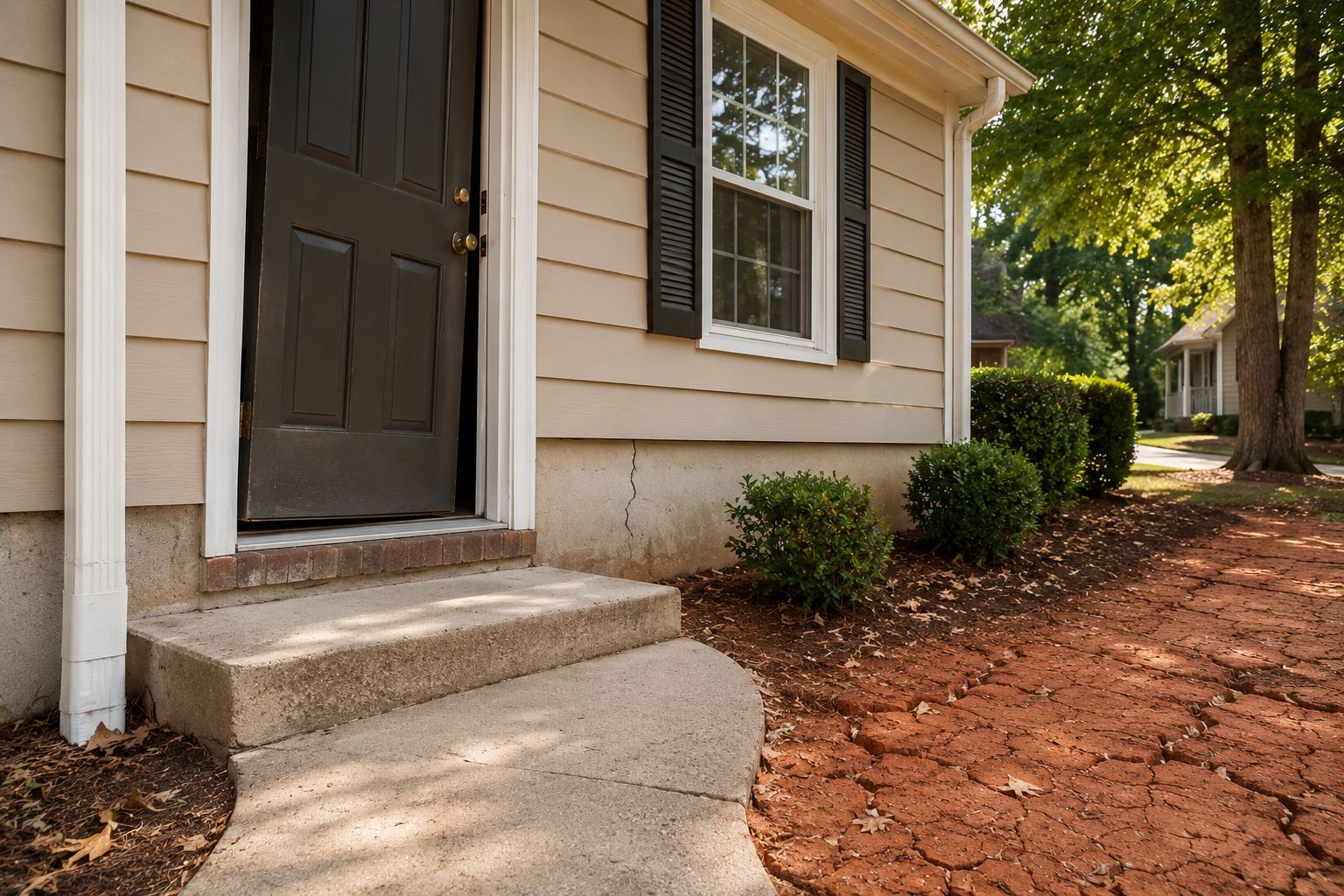
Northeast Georgia's soil does homeowners here a disservice they never signed up for. Red clay holds water like a sponge during wet stretches, then pulls tight and shrinks as it dries out, a behavior soil scientists call shrink-swell capacity, according to Kansas State University Extension research on clay soils. Every wet-to-dry cycle moves the soil a little, and a support pier resting on that clay without a proper footing can tilt or settle with each swing. It doesn't take much movement to show up as a dip in the floor directly above it.
Humidity does the rest of the damage from a different angle. Wood framing starts to decay once its internal moisture content climbs above 30 percent and stays there, based on U.S. Forest Service Forest Products Laboratory research on decay thresholds in wood systems, while below 20 percent, decay doesn't happen. A vented crawlspace in this part of Georgia can sit well above that 30 percent threshold for months during a humid summer, especially with standing water or no vapor barrier on the ground. That's the environment where a joist goes from solid to spongy without anyone noticing until the floor upstairs starts to give.
Tip: Press a screwdriver into any exposed floor joist you can reach from a crawlspace access panel. Solid wood resists the point. Wood that's losing its strength lets the screwdriver sink in with almost no effort, which is a faster warning sign than waiting for the floor upstairs to feel soft.
What a Simple Bounce Test Tells You
You don't need equipment to start narrowing down the cause. Walk the affected area slowly and pay attention to what the floor actually does under your weight.
Springy but level
If the floor gives underfoot but doesn't visibly slope in any direction, the joists themselves are the likely suspect. That's a framing problem more than a foundation problem, though the two don't always stay separate for long.
Sloped and firm
A floor that tilts toward one wall or corner but doesn't flex when you step on it usually points to a support pier or footing that has settled. The joists are fine. What's under them isn't.
Sloped and springy together
This combination, common in older homes with vented crawlspaces, usually means both problems are happening at once. A pier settled first, which shifted extra weight onto the joists nearby, which then started to sag and soften under the added load.
None of these tests replace a real inspection. But they tell you what to describe when you call someone, and they tell you roughly how urgent the situation has become.
Fixing What's Underneath, Not Just the Floor
Refinishing or leveling the floor surface only masks the problem for a while. Addressing what's underneath means dealing with the joists, the piers, or both.
Sistering damaged joists
A new joist, matched in size and fastened along the full length of the old one, restores the load path without tearing out the subfloor above. This works well when the wood has weakened but the framing layout is otherwise sound.
Installing or resetting support jacks and posts
Adjustable steel jacks replace failing wood posts and can be tightened gradually to bring a sagging beam back toward level, which avoids stressing the framing above with a sudden lift.
Piering the foundation
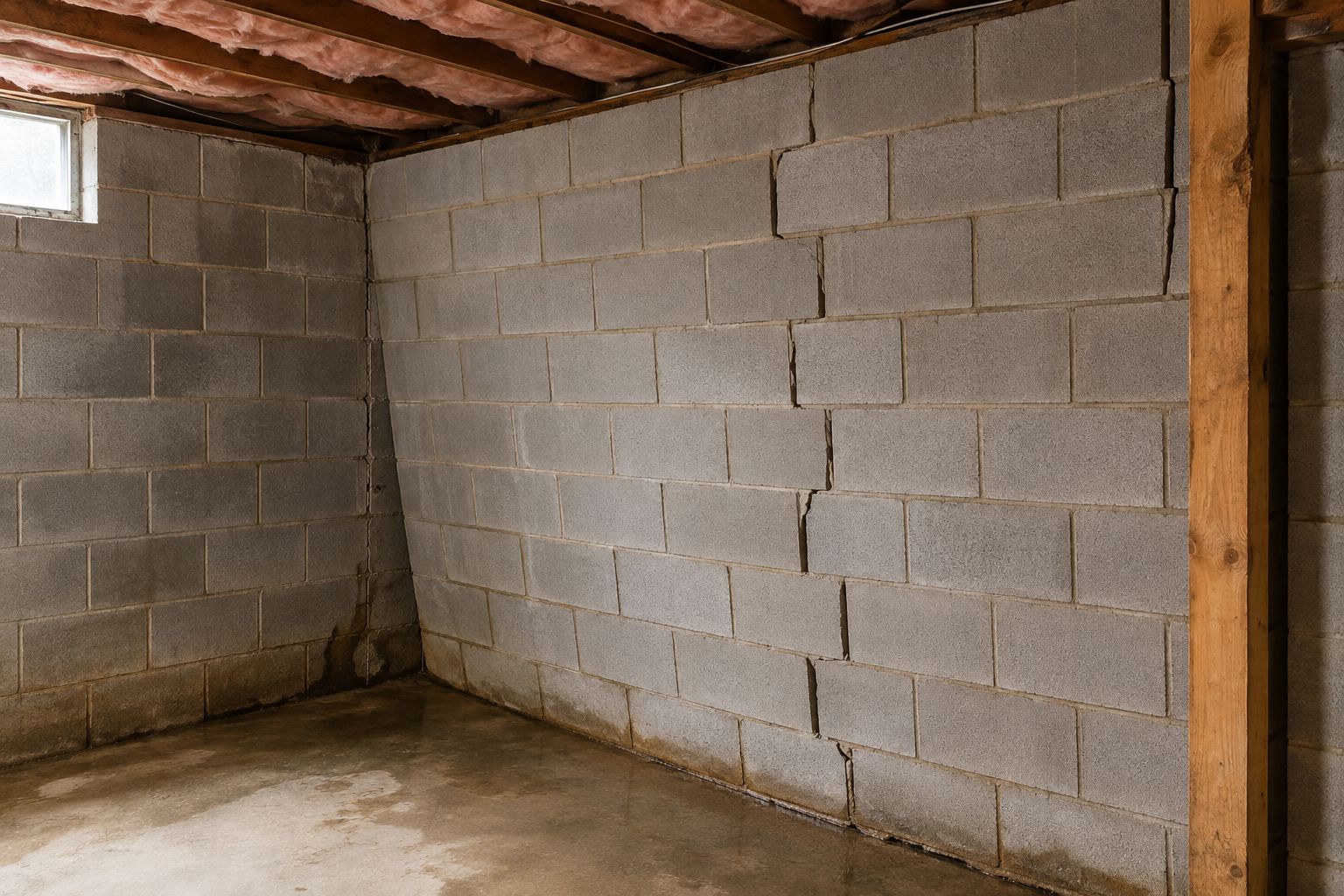
When settlement traces back to the foundation itself rather than just an interior support post, steel piers get driven or screwed down past the unstable topsoil to bearing material that doesn't shift with the seasons. Push piers, one common system, use the weight of the structure itself as the reaction force to advance steel sections into the ground until they reach that stable material, then transfer the building's load through the pier instead of through the soil that failed. It's a load-transfer system, not a quick patch, and that's the difference between stopping the movement and just managing it.
WARNING: Don't add fill dirt, gravel, or extra soil under a sagging area to try to level it yourself. Loose fill compacts unevenly under load and can add pressure against a foundation wall as it settles, which sometimes makes the movement worse instead of stopping it.
Frequently Asked Questions
Why does my floor bounce in just one room and not the rest of the house?
Floor framing is built from individual joists and piers, so one weak joist or settling pier can fail alone. It rarely means the whole foundation is in trouble.
Is a bouncy floor dangerous, or just annoying?
It depends on how far things have deteriorated. A mild bounce is an early warning worth addressing soon. A bounce paired with a slope or sticking doors shouldn't wait.
How can I tell if it's the joists or the foundation causing my sloping floor?
A bounce without a visible slope usually points to the joists. A slope without much flex points to a settled pier. Older crawlspaces often show both problems together.
Does crawlspace encapsulation stop floors from sagging?
Encapsulation seals out moisture, keeping joists from staying in that decay-prone range. It won't reset a settled pier or repair wood that's already rotted; homes often need both fixes.
Will leveling the floor fix the underlying problem?
No. Leveling compound or shims address the surface, not the support system underneath. If a joist or pier is still failing, the floor will move again right through it.
How urgent is a sloping or bouncy floor in an older Georgia home?
Older crawlspaces built before encapsulation was common often have joists already worn by years of humidity swings. A floor that's actively changing deserves a prompt look soon.
What Your Sloping Floor Is Really Saying
A floor that moves in one specific spot is doing you a favor, even if it doesn't feel that way. It points straight at the exact piece of the structure that needs attention, instead of leaving you to guess at the whole house. Most homes settle somewhere over the decades, and that alone isn't cause for alarm. What matters is catching the section that's still actively moving before it pulls the rooms around it down too, turning one soft spot into a slope that keeps spreading.
Homeowners across Hall County, GA deal with this same pattern, red clay that shifts with every wet season and crawlspace framing that takes the hit quietly for years before a floor upstairs ever gives a hint. Apex Waterproofing & Foundation Repair LLC
has spent 10
years working through exactly these cases, tracing a slope or a bounce back to the settling pier or rotted joist causing it. Knowing which one is at fault is what turns a guessing game into a fix that actually holds.
Recent Posts