Quick Answer: Doors and windows that stick at the same time every year are usually reacting to soil movement under the foundation, not to humid air swelling the wood. Clay-heavy soil takes on water and firms up in wet months, then dries and pulls back in hot, dry stretches. That movement is rarely even across a whole house, so one corner lifts or drops slightly more than another, the frame goes out of square, and the door binds. If the sticking comes and goes with the seasons and nothing else changes, you are usually watching moisture. If it gets worse each year, spreads to more doors, or shows up alongside diagonal cracks at the frame corners, the foundation is moving and the cause is worth finding.
It starts with one door. The back door that closed fine in February needs a shoulder by the middle of July. A month later the window over the kitchen sink will not slide. You plane the door, you get through the season, and then in the winter that same door rattles in its frame with a gap along the latch side. Nothing about the house looks broken, so you file it under old-house quirks and move on.
That yearly swing is not a quirk. A door is a precise thing, hung to a tolerance of a couple of millimeters, and it sits in a frame that is tied to the walls, which are tied to the floor system, which sits on the foundation, which sits on soil. When the soil changes, everything above it moves a little too. In this part of Georgia, where nearly every home sits on dense red Piedmont clay, the soil is the part of the assembly most likely to be doing the moving. Reading the pattern tells you whether you are looking at a nuisance or at a foundation that needs attention.
Why a Door That Fits in Winter Binds in Summer
Wood does absorb moisture, and a solid wood door in an unconditioned space can swell slightly in humid weather. But wood swelling is a small, even effect, and it does not explain most of what homeowners actually see.
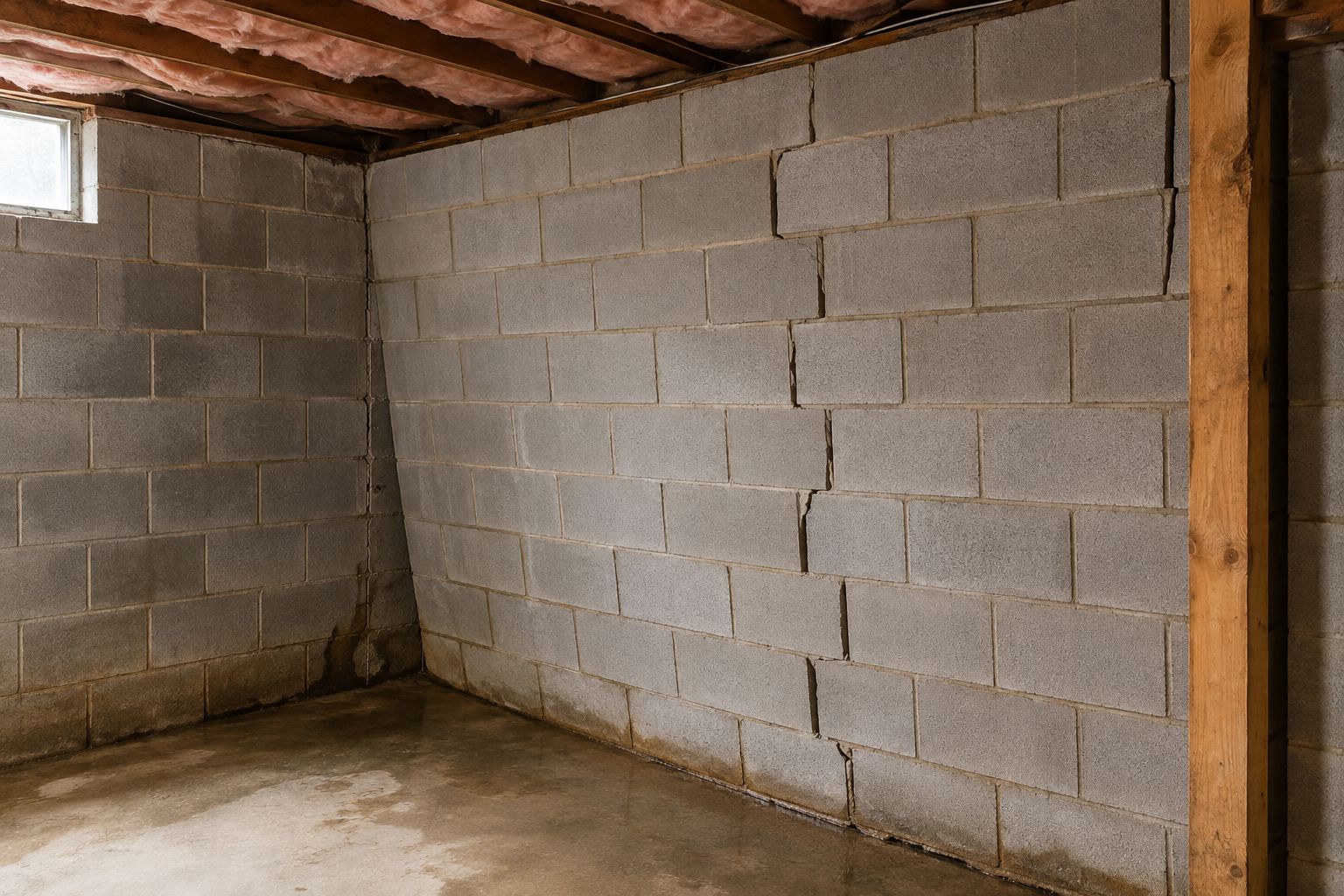
The tell is the pattern. A door that swells from humidity tends to get tight all around and rub evenly. A door that is being squeezed by structural movement binds in one specific place, usually a top corner or one side, while the gap on the opposite side opens up. Reveal, the gap between the door slab and the jamb, is the thing to read. Kneel down and sight along it. If it is wide at the top of the latch side and pinched at the bottom, or the diagonal has gone out of true, the opening itself is no longer square, and no amount of humidity does that to a rectangle. Something under the frame has shifted.
Windows tell the same story with less drama. Double-hung sashes that will not slide, casements that will not latch, and a stubborn corner on a slider are all reports from the same structure, just from a different height on the wall.
What Georgia Red Clay Actually Does Under a House
Soil that is rich in clay changes volume when its moisture content changes. It takes on water and expands, then dries and contracts. That behavior, called shrink-swell, is one of the most widespread ground hazards in the country. The American Society of Civil Engineers has estimated that roughly one in four homes in the United States has some damage caused by it, and the U.S. Department of Agriculture has estimated that about half of American homes sit on soils with expansive behavior. In the most aggressive clays, the mineral montmorillonite can swell to many times its dry volume and generate pressures well over 30,000 pounds per square foot against whatever is in its way.
The red clay across Hall County and the surrounding Piedmont is a different animal, and the difference matters. The dominant soil series here is a deep, kaolinitic red clay that soil surveys rate as low shrink-swell potential. It is not the violently expansive gumbo that wrecks slabs in Texas. That is genuinely good news, and it is also why the movement here is so easy to miss for years.
What our clay does instead is hold water and let it go slowly. The subsoil under a typical home in this area can run 35 to 70 percent clay, with water moving through it at well under two inches per hour. This region takes on 45 to 55 inches of rain in an average year, and it does not arrive evenly. So the soil around your footings runs a long, slow cycle: saturated and firm through a wet winter and spring, drawn down through a hot, dry August, then recharged again. The clay does not explode and it does not collapse. It breathes, a little, year after year, and it does so unevenly.
Uneven is the whole problem. If every square foot of soil under a house rose and fell by the same amount at the same time, the house would ride up and down like a boat and nothing would crack. That never happens. The south wall bakes in the sun while the north wall stays damp. A downspout keeps one corner wet all winter. A big oak pulls hundreds of gallons out of the ground on one side of the house all summer. The soil near the surface, the top five or six feet where the seasonal moisture swing actually lives, dries and rewets on different schedules in different places. The result is differential movement, and differential movement is what puts a door frame out of square.
Heavier parts of the house resist, lighter parts do not. A masonry chimney or a load-bearing wall on a footing behaves differently under the same soil pressure than a light porch slab or a corner of the crawlspace carrying less weight. That mismatch shows up as one part of the structure moving while the part attached to it stays put, which is exactly the stress that opens gaps at door frames.
What Is Actually Driving the Moisture Swing
The soil is the mechanism, but water management is almost always the cause you can do something about. These are the sources we find behind seasonal foundation movement in this area, in roughly the order they show up.
Roof water landing at the foundation. A gutter that overflows or a downspout that dumps at the base of the wall soaks one specific patch of clay every time it rains, and that patch stays wetter and firmer than the soil ten feet away. It is the single most common reason one corner of a house behaves differently from the rest of it.
Ground that slopes back toward the house. Grading settles over the decades, mulch beds get built up higher than the sill, and a yard that once shed water now delivers it to the wall. Water that cannot run away sits against the footing and works its way down.
Trees close to the structure. A mature tree is a pump. Through the growing season, its roots draw moisture out of the ground for a surprising distance, and clay under the drip line shrinks as they do. The moisture-active zone in most soils is the upper five to six feet, but tree roots and dry-season cracking can pull that drying considerably deeper. A house with a big hardwood on one side and open lawn on the other has a built-in moisture imbalance every summer.
Plumbing and irrigation leaks. A slow supply-line leak, a cracked sewer line, or an irrigation head running against the foundation keeps one zone of clay saturated year-round, which unsettles a house just as effectively as one zone that dries out.
A wet crawlspace. Homes here are far more likely to sit over a crawlspace than a basement, and a crawlspace with standing water, damp soil, or a torn vapor barrier is telling you the ground under the piers is holding water it should not be. Wet ground under the interior supports moves for the same reason wet ground under the perimeter footing does.
WARNING: Planing the door, shimming the strike plate, or patching the crack does not stop what is causing them, and it destroys your evidence. If the frame is out of square because the structure is moving, a planed door will simply bind again on the other edge when the season turns, and the crack you filled will reopen a quarter inch farther along. Cosmetic repairs are the last step of a foundation fix, never the first. Find out what the soil and the water are doing before you touch the trim.
What Actually Corrects It
There is no single answer, because the right work depends on what the house is doing and why. But the order of operations is consistent.
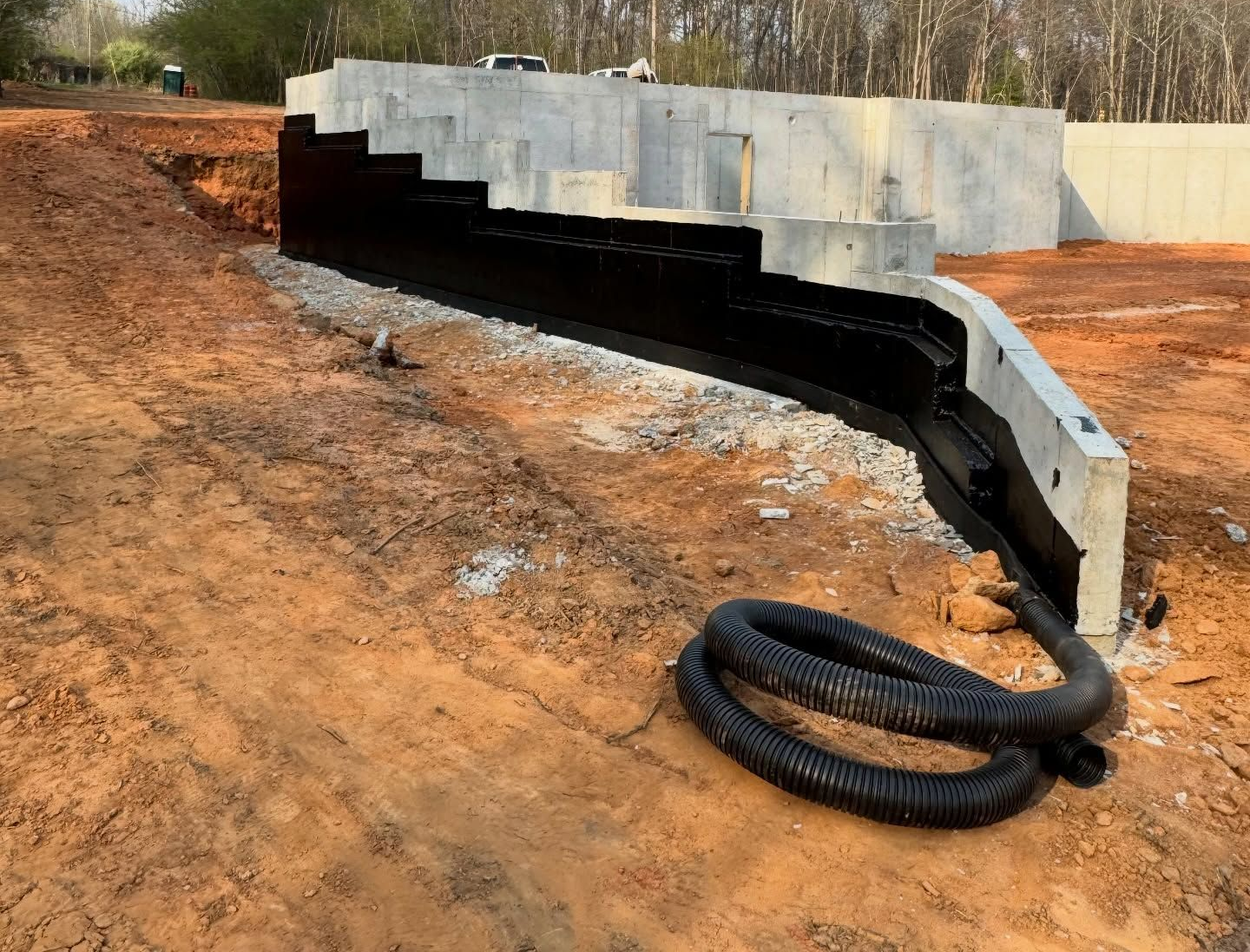
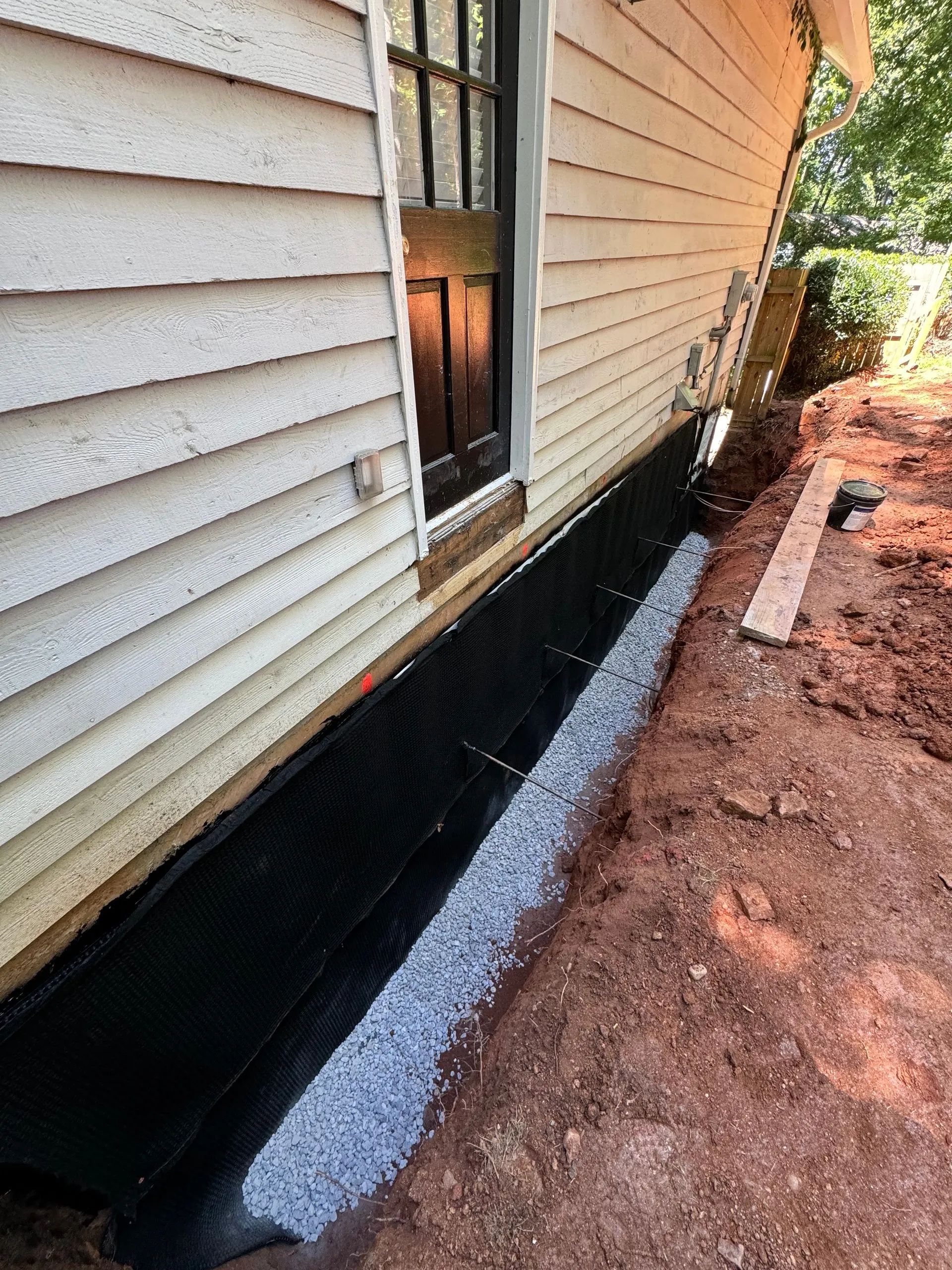
Control the water first. In most homes with seasonal sticking and no significant structural damage, steadying the moisture around the foundation is the fix. That means gutters that carry water away, downspout extensions or buried lines that discharge well clear of the wall, regrading so the ground falls away from the house, and drainage, such as a French drain or a surface drain, where a low spot in the yard keeps sending water back. Take the wet-dry swing out of the soil and the soil stops moving the house.
Dry out the crawlspace. Where the ground under the house stays damp, a proper vapor barrier, drainage, and encapsulation stop moisture from cycling through the soil and the framing above it. That protects the wood from rot as much as it steadies the ground.
Support what has already dropped. When settlement has gone far enough that the structure will not come back on its own, the load has to be carried by something more reliable than the shallow soil. Foundation piers are driven or screwed down through the moisture-active zone into deep, dense soil or bedrock, then bracketed to the footing so the weight of the house transfers to ground that does not care what the weather is doing. Under a crawlspace, adjustable support jacks and new footings do the same thing for sagging girders and joists. That is what permanently stops the seasonal cycle for a home that has moved past the point where water management alone will hold it.
Fix the cosmetics last.
Once the movement is arrested, the cracks get sealed, the doors get rehung, and the trim gets made right, and it stays right.
Frequently Asked Questions
Is my door sticking from humidity or from the foundation?
Read the gap. Humidity swells wood evenly, so the door rubs all the way around. Structural movement puts the frame out of square, binding hard in one corner while the gap opens opposite. Watch that.
Should I worry if the sticking goes away in the winter?
Not necessarily, but track it. Seasonal sticking that fully reverses usually means the soil is cycling without permanent damage. If the binding worsens yearly, involves more doors, or stops reversing, the movement is quietly accumulating.
Does Georgia red clay really move enough to do this?
Piedmont red clay rates low for shrink-swell compared with aggressive western clays, so movement here is gradual. But it is clay-rich and drains slowly, holding water unevenly enough to put a frame out of square.
Will removing the tree near my house fix it?
Sometimes it helps, sometimes it worsens things. A tree that dried one side for thirty years built an equilibrium the house sits in. Remove it and that soil rehydrates and swells, causing movement itself.
Can I just adjust the door and be done?
You can, and the door will work until the season turns. But the frame goes out of square again, because the cause is under the house, not the wood. Adjust last, after water is handled.
How do I know whether it needs piers or just drainage?
It depends how much the structure moved and whether it still moves. Seasonal sticking with level floors is a water project. Real settlement, out-of-level floors, and growing cracks need piers first. Both start with measuring.
Reading What Your House Is Telling You
A door that binds every July and swings free every January is not the house falling apart. It is the house reporting, honestly and for free, that the soil under one part of it is moving on a different schedule than the soil under another part. Most of the time, that report leads back to water: a downspout, a grade, a wet crawlspace, a thirsty tree. Fix the water, and the soil settles into a steadier rhythm, and the doors stop keeping score. When the movement has gone further than that, the answer is to stop guessing and get the load onto ground that does not swing with the weather. Either way, the worst move is to plane the door, fill the crack, and wait to see what next summer brings.
Get the movement diagnosed before it takes another season. A house that sticks in the summer and cracks in the winter is telling you something about the soil and the water around it, and that story is readable. Apex Waterproofing & Foundation Repair LLC, serving Hall County, GA, measures your floors, reads the crack pattern, traces where roof and yard water are actually going, checks the crawlspace, and tells you plainly whether this is a drainage and grading correction or a home that needs piers and support jacks to stop settling. With 10
years of
foundation and waterproofing
work behind us, you get a straight answer and a fix that holds. Reach out to schedule a foundation and drainage assessment.
Recent Posts