Quick Answer: A bowing or leaning foundation wall is almost always the result of hydrostatic pressure — saturated soil pushing against the wall with far more force than the concrete or block was built to resist. In North Georgia, that pressure usually comes from red clay soil that swells when it's wet and pulls away when it dries, combined with water that's draining toward the house instead of away from it. Walls with less than roughly 2 inches of inward displacement can often be stabilized with carbon fiber straps. Walls that have moved further, or that need to be pulled back toward plumb, typically call for wall anchors or steel I-beams. The method that fits your wall depends on how far it has moved and why.
You noticed it while you were down there looking for a box of holiday decorations, or maybe changing a filter in the crawlspace. A section of block wall that used to look flat now has a slight curve to it, like someone leaned a plywood sheet against it years ago and it never quite sprang back. Or a horizontal crack has opened up about a third of the way up the wall, and the wall below that crack seems to be tilting into the room while the wall above it stays put. Either way, something is pushing on that wall from the outside, and it isn't stopping on its own.
Foundation walls are built to hold back soil, not to flex under it forever. When one starts to bow or lean, the force on the outside has quietly outgrown what the wall can handle. Figure out what's doing the pushing, and how far the wall has already moved, and you'll know if you're facing a simple reinforcement or something more involved.
What's Actually Pushing on the Wall
Hydrostatic Pressure Is The Main Driver
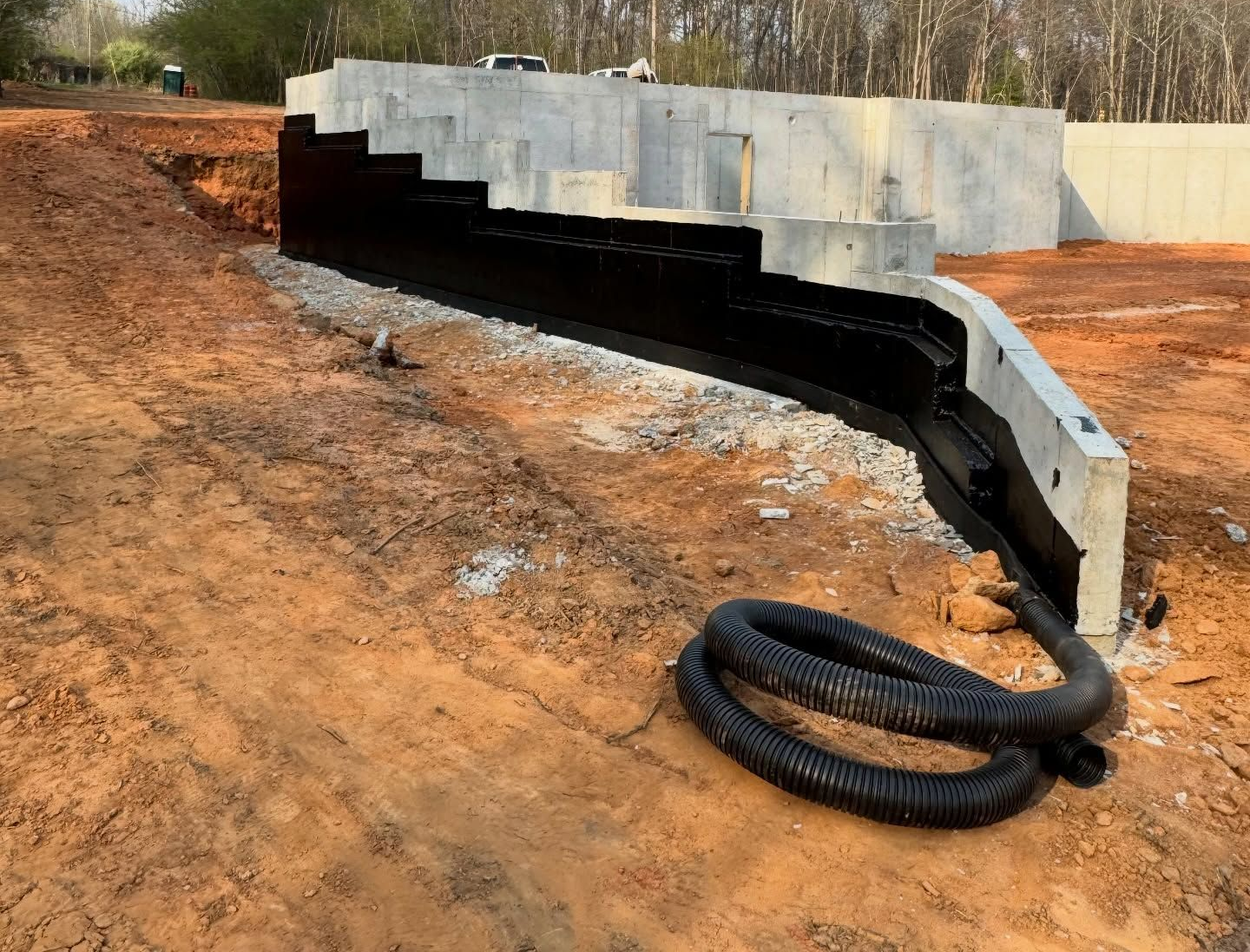
When soil next to your foundation becomes saturated, it gets heavy, and that weight presses against basement or crawlspace walls. Rainwater with nowhere to drain increases pressure, especially after storms, creating conditions that can eventually push walls.
Expansive Clay Soil Multiplies The Problem
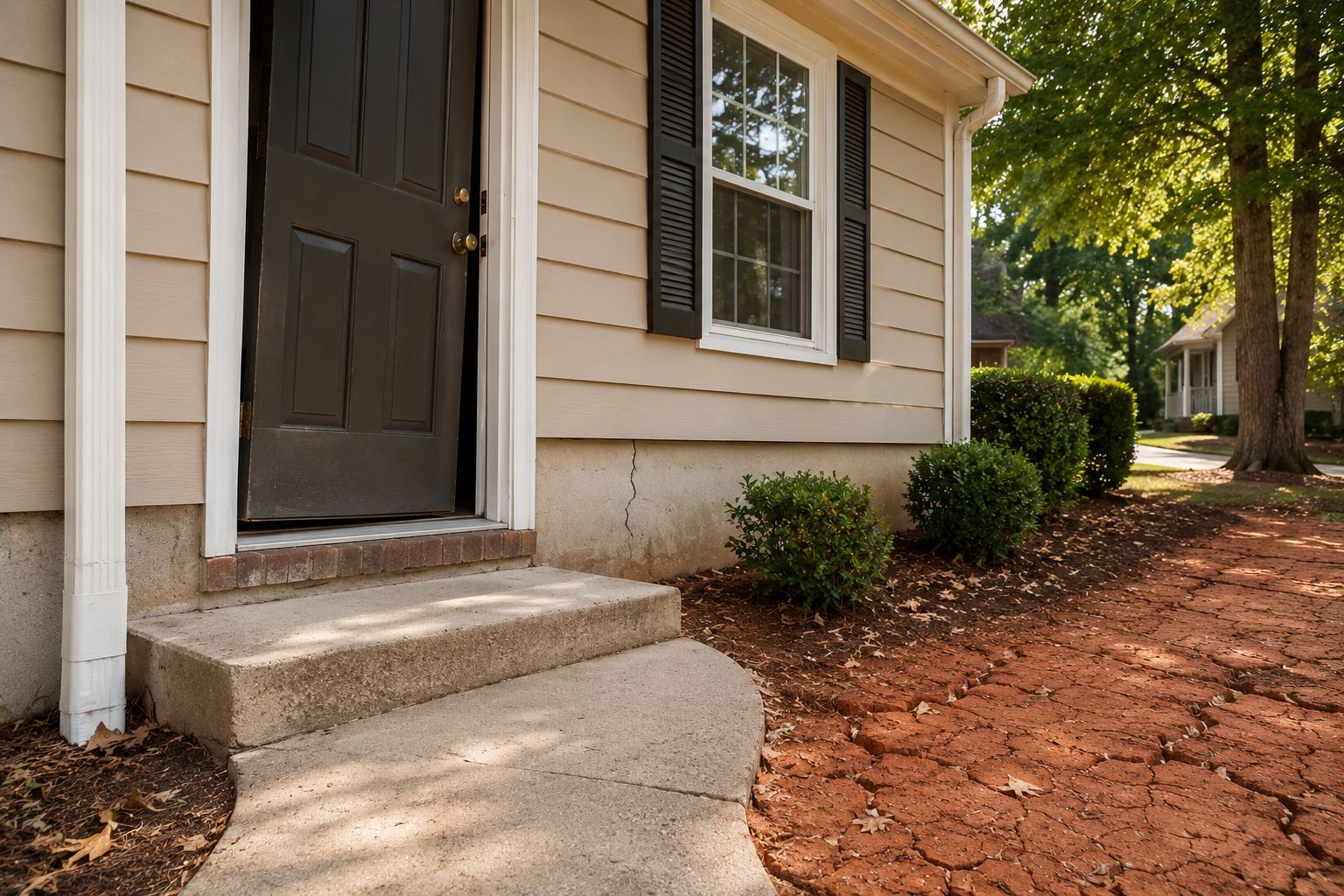
Much of Northeast Georgia sits on red clay, which absorbs water and swells, then shrinks as it dries. Repeated expansion and contraction creates pressure against foundation walls. Over several seasons, these cycles can contribute to bowing and movement.
Poor Drainage Accelerates Everything
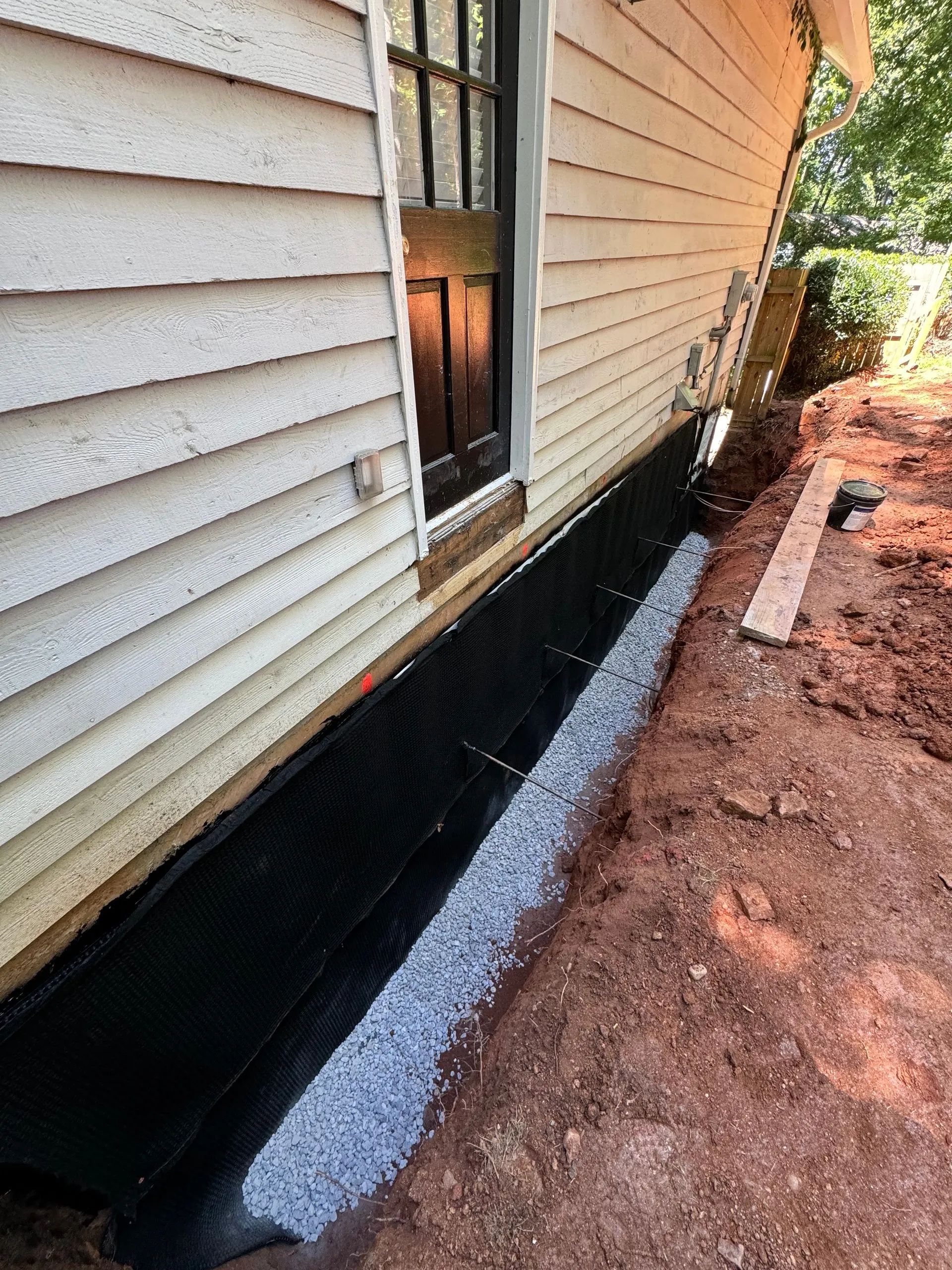
A downspout dumping water near the foundation, a yard sloping toward the house, or overflowing gutters can saturate surrounding soil. These drainage problems do not usually cause bowing alone, but they increase hydrostatic pressure and keep foundation soil wet.
Frost And Root Pressure Play Smaller Roles
During winter, moisture in soil can freeze and expand, creating temporary pressure against foundation walls. Large tree roots near foundations can also add pressure over time. Neither is usually the primary cause, but both can worsen existing conditions.
Bowing, Leaning, and Shearing Aren't the Same Thing
It helps to know which pattern you're looking at. Each one tells you something different about how the wall is failing.
A bowing wall curves inward, usually worst at the midpoint of the wall's height. This is the classic sign of hydrostatic pressure — the soil is pushing evenly along the wall, and the middle, which has the least support from the floor above and the footing below, gives first.
A leaning wall tilts as a whole unit, top to bottom, rather than curving in the middle. This pattern often shows up with poured concrete walls or shorter crawlspace walls and can point to the wall's base sliding or rotating rather than just bending.
A shearing wall has a horizontal crack partway up, with the section below the crack pushed in further than the section above it. This happens when the top of the wall is held in place by the floor framing above while the lower portion isn't restrained the same way, so the wall essentially splits along that weak line and the bottom half moves independently.
All three trace back to the same root cause: pressure the wall was never designed to resist. But the pattern you're seeing, and how far the wall has moved, both shape which stabilization method actually makes sense.
Signs That Usually Show Up Alongside a Bowing Wall
A wall rarely moves alone. Watch for these companions.
Horizontal Or Stair-Step Cracks
A horizontal crack along a block wall's mortar joint, or a stair-step crack climbing diagonally through the blocks, can indicate lateral pressure against the wall. These patterns often suggest the wall is being pushed inward rather than simply settling downward.
A Visible Gap Or Shift Where The Wall Meets The Floor
If the base of a foundation wall has shifted inward, you may notice a small gap between the wall and slab. The bottom may also appear misaligned, uneven, or no longer flush with its original position along the floor.
Doors And Windows On The Level Above Sticking Or Not Latching
Foundation movement can shift framing above the affected wall enough to throw door and window frames out of square. You may notice doors sticking, windows becoming difficult to operate, or latches failing to line up properly with their catches.
Damp Or Musty Crawlspace Air
Water intrusion that contributes to foundation pressure can also raise humidity inside a crawlspace. Musty odors, condensation, damp insulation, or visible moisture on framing may indicate drainage problems that deserve attention before they contribute to more serious wall movement.
A Wall That "Sounds Hollow" Or Has Efflorescence
White, chalky mineral deposits called efflorescence appear when water moves through masonry and leaves minerals behind. While deposits do not prove structural damage, they indicate ongoing moisture movement and are worth investigating when wall bowing is also present.
Tip: A flashlight held at a low angle along the wall, shining sideways rather than straight on, makes a bow or lean much easier to see than looking at the wall head-on. Shadows will pool in the curve and make even a subtle deflection stand out.
Measuring How Far the Wall Has Moved
Once you've spotted a bow or lean, the next question is simple: how far out of plumb is it? That measurement drives the whole repair decision.
Hold A Straightedge Or Level Against The Wall
Use a 4-foot level or straight board vertically against the wall to identify the largest gap. Half-inch to one-inch gaps suggest early movement, while two inches or more indicates significant displacement.
Track It Over Time If The Movement Is Subtle
Mark the wall's position with pencil or tape, then recheck after several weeks or months. This helps determine whether movement is active or whether the wall has remained stable since earlier movement.
Don't Rely On Eyeballing It Alone
Visual estimates can be misleading, especially in dim basement lighting. A straightedge provides a more accurate measurement, while professional inspections add experience in identifying important cracks, movement patterns, and structural concerns.
Matching the Repair to the Movement
There's no single fix that works for every bowing wall. The right method depends on how far it's already moved, and whether it needs to be straightened or just held where it is.
Carbon Fiber Straps Work Well For Early-Stage Bowing
For walls with less than roughly 2 inches of inward displacement, carbon fiber straps bonded vertically to the interior can stop further movement. They run from the footing to the top of the wall, resist additional bowing, require minimal space, and generally preserve the existing wall position.
Wall Anchors Are Built To Straighten A Wall Over Time
For walls with greater movement, wall anchors can gradually pull the wall closer to its original position. Steel rods pass through the wall and connect to exterior plates anchored in stable soil. Interior plates are tightened incrementally, allowing controlled correction over time.
Steel I-Beams Brace Severely Bowed Walls In Place
For significant displacement, vertical steel I-beams installed between the floor slab and overhead framing provide strong resistance against further inward movement. They generally stabilize rather than straighten the wall, but they require no exterior excavation, making them practical when access around the foundation is limited.
The Right Call Depends On More Than The Wall Alone
Choosing a repair depends on displacement, ongoing movement, underlying causes, and exterior accessibility. Drainage and grading problems should also be corrected because continued hydrostatic pressure can undermine reinforcement. Stabilizing the wall without addressing water buildup may leave the underlying problem unresolved.
WARNING: A wall that is actively bowing or leaning is a structural safety issue, not a cosmetic one. Delaying a professional evaluation gives the pressure behind the wall more time to work, and a wall that could have been stabilized with carbon fiber straps today can progress to needing anchors or beams by the time it's addressed. If you can see daylight-visible curvature, a widening horizontal crack, or any sign the wall has shifted recently, treat it as time-sensitive and have it evaluated rather than monitoring it on your own for an extended stretch.
Why This Isn't a DIY Project
A few posts jammed against the wall can look like a fix. It isn't. A wall under active hydrostatic pressure can fail suddenly rather than gradually, and improvised bracing that isn't matched to the actual load on the wall gives you a false sense of security while the wall keeps moving behind it. Getting the repair right also depends on an accurate read of how far the wall has moved and why — and that's easy to misjudge without experience looking at dozens of these walls in similar clay soil conditions.
There's also the question of what's driving the pressure in the first place. A repair that reinforces the wall but ignores a downspout dumping water at the foundation, or a yard that slopes the wrong way, treats the symptom and skips the cause. A real evaluation looks at both — the wall itself and what's pushing on it — so the fix holds up through the next several years of Georgia's wet-dry soil cycles instead of needing a second look.
Frequently Asked Questions
How much bowing in a basement wall is considered dangerous?
Displacement of an inch or less is generally considered early-stage, while 2 inches or more indicates significant movement. Ongoing movement is more concerning and may require professional stabilization to prevent further structural damage.
Can a bowing wall fix itself if the weather dries out?
No. Dry weather may temporarily slow movement, but it cannot reverse existing structural damage. Future rainfall can reactivate soil pressure, so a bowing wall requires proper evaluation and stabilization rather than simply waiting.
Does a leaning crawlspace wall need the same repair as a bowing basement wall?
Not always. Both can result from hydrostatic pressure, but crawlspace walls are typically shorter and behave differently. The appropriate repair depends on wall height, movement, construction type, accessibility, and the underlying cause.
Will fixing the drainage around my house stop a wall from bowing further?
Improving grading and drainage can reduce water reaching foundation soil and lower hydrostatic pressure. However, drainage improvements alone cannot stabilize an already damaged wall, which may still require structural reinforcement or another appropriate repair.
How can I tell if a wall crack is from bowing or just normal settling?
Horizontal cracks, stair-step cracks, or cracks accompanied by visible bowing or leaning often indicate lateral pressure. Vertical hairline cracks without movement are more commonly associated with settling or concrete curing, though inspection remains advisable.
What happens if I just keep an eye on a slightly bowing wall instead of repairing it?
Monitoring briefly while arranging an evaluation may be reasonable, but active movement can continue unnoticed. Delaying repairs may allow additional displacement, potentially turning a relatively simple stabilization into a more extensive structural repair.
Keeping Foundation Walls Stable Through Georgia’s Wet Seasons
A bowing or leaning wall is rarely an isolated structural problem. In Hall County, GA, saturated soil, expansive red clay, and drainage conditions can continue placing pressure against the foundation long after the first crack or curve becomes visible. Understanding how that pressure affects the wall makes it easier to recognize movement before it becomes more severe and helps ensure the stabilization method matches the actual condition of the structure.
With the right evaluation, many foundation wall problems can be addressed before displacement becomes extensive. Hall County, GA homeowners can rely on Apex Waterproofing & Foundation Repair LLC, with 10
years of experience, to understand how local soil and moisture conditions affect foundation movement. A properly matched repair can stabilize the wall while addressing the environmental conditions that contributed to the pressure in the first place.
Recent Posts