Waterproofing Service in Dahlonega, GA
Water finds every low spot, every hairline crack, and every gap around a foundation wall, and it rarely announces itself with a sudden flood. The first signs are usually subtle: a musty smell in a crawlspace, faint discoloration on a basement wall, a door that starts sticking for no obvious reason. Left alone, that slow intrusion rots framing lumber, feeds mold colonies through insulation and subfloor, and eventually lets a foundation shift as saturated soil around it swells and contracts. By the time damage becomes visible inside a living space, the structural cost is usually far higher than at the first faint sign. Controlling where and how water reaches a foundation, rather than reacting after it already has, is the entire premise behind proper waterproofing.
Hillside terrain in the foothills of the Blue Ridge Mountains means most Dahlonega properties sit on sloped lots where rainfall runs downhill fast rather than soaking in evenly. The area's dense red clay compounds that runoff problem, since clay swells when saturated and presses hard against whatever foundation wall or crawlspace vent stands in its way, then shrinks and cracks open new gaps once it dries out again. Older homes built before modern grading standards and newer construction on cleared hillside lots both face the same basic mechanism, just at different stages of wear, which keeps water management a near-constant concern for property owners in the area.
We are Apex Waterproofing & Foundation Repair LLC, a reliable waterproofing service in Dahlonega, GA, run with owner-operator Gio overseeing every job personally. With over 10 years of hands-on experience in north Georgia's clay and hillside terrain, we handle basement waterproofing, crawlspace repair and encapsulation, foundation repair, drainage solutions, and new construction waterproofing. What sets our work apart is that we diagnose how water actually reaches a property before recommending a fix, rather than applying the same solution to every job regardless of the terrain behind it.
About Dahlonega, GA
Dahlonega sits in Lumpkin County, Georgia, in the foothills where the Piedmont gives way to the southern Blue Ridge Mountains. Once the site of America's first major gold rush in 1828, the town has grown into a popular destination for its historic downtown square, nearby wineries, and access to the southern end of the Appalachian Trail at Springer Mountain.
University of North Georgia enrollment keeps a steady student population in town alongside longtime residents and a growing number of newer homes built on the hillsides surrounding the historic core. That mix of old and new construction spans a wide range of foundation ages and grading standards across the community.
Elevation brings higher rainfall totals than much of the rest of north Georgia, and the hilly terrain sends that rain downhill toward whatever sits in its path. Combined with the region's characteristic red clay, the landscape puts steady pressure on basements, crawlspaces, and foundations throughout the wetter months of the year.
How Dahlonega, GA's Red Clay Soil Stresses a Foundation Over Time
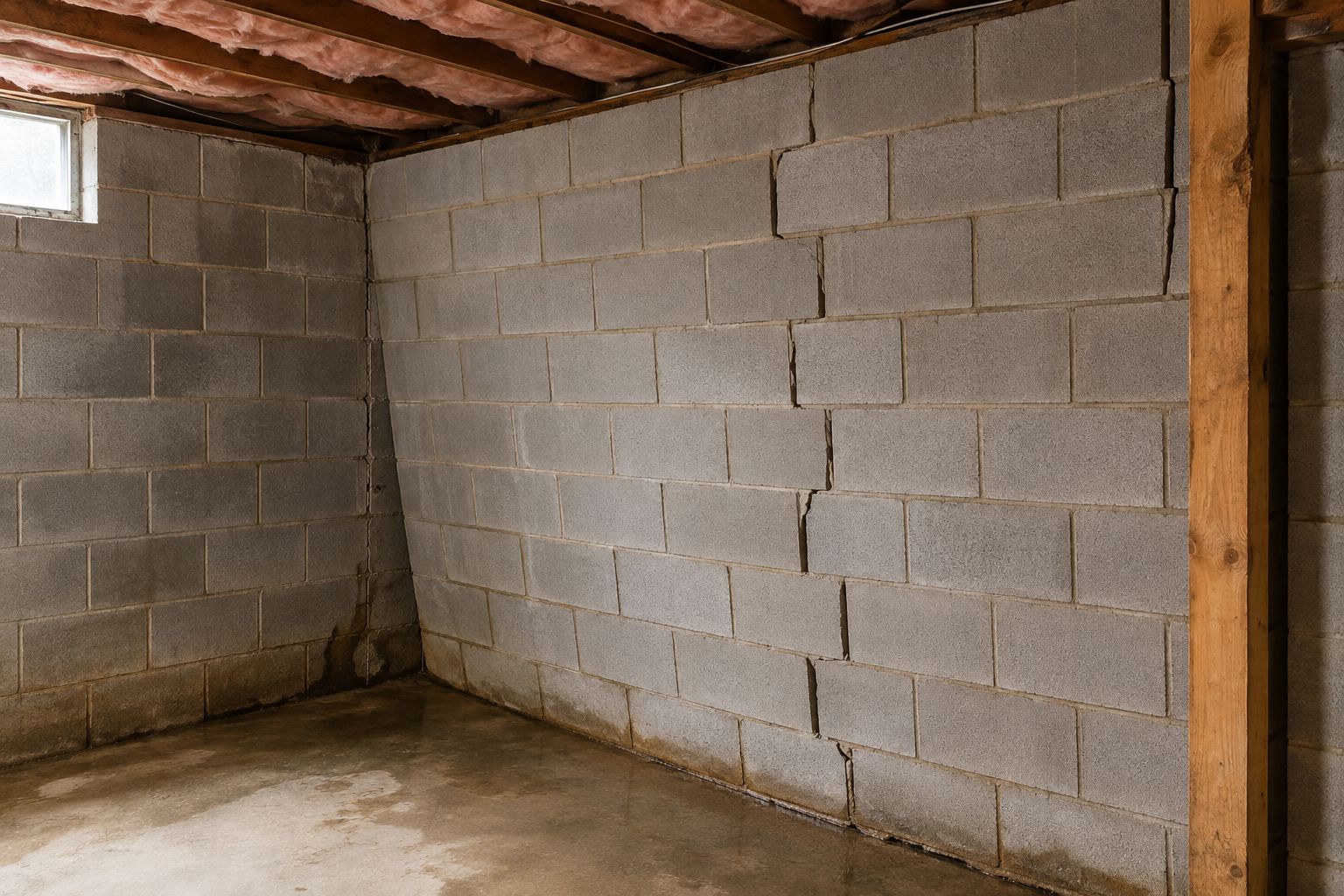
Red clay common to the north Georgia foothills behaves almost like a sponge under pressure. When saturated by heavy rain, it expands and pushes outward against whatever foundation wall holds it back, creating lateral pressure a wall was never designed to resist indefinitely. That pressure often shows up first as a horizontal or stair-step crack rather than a dramatic failure.
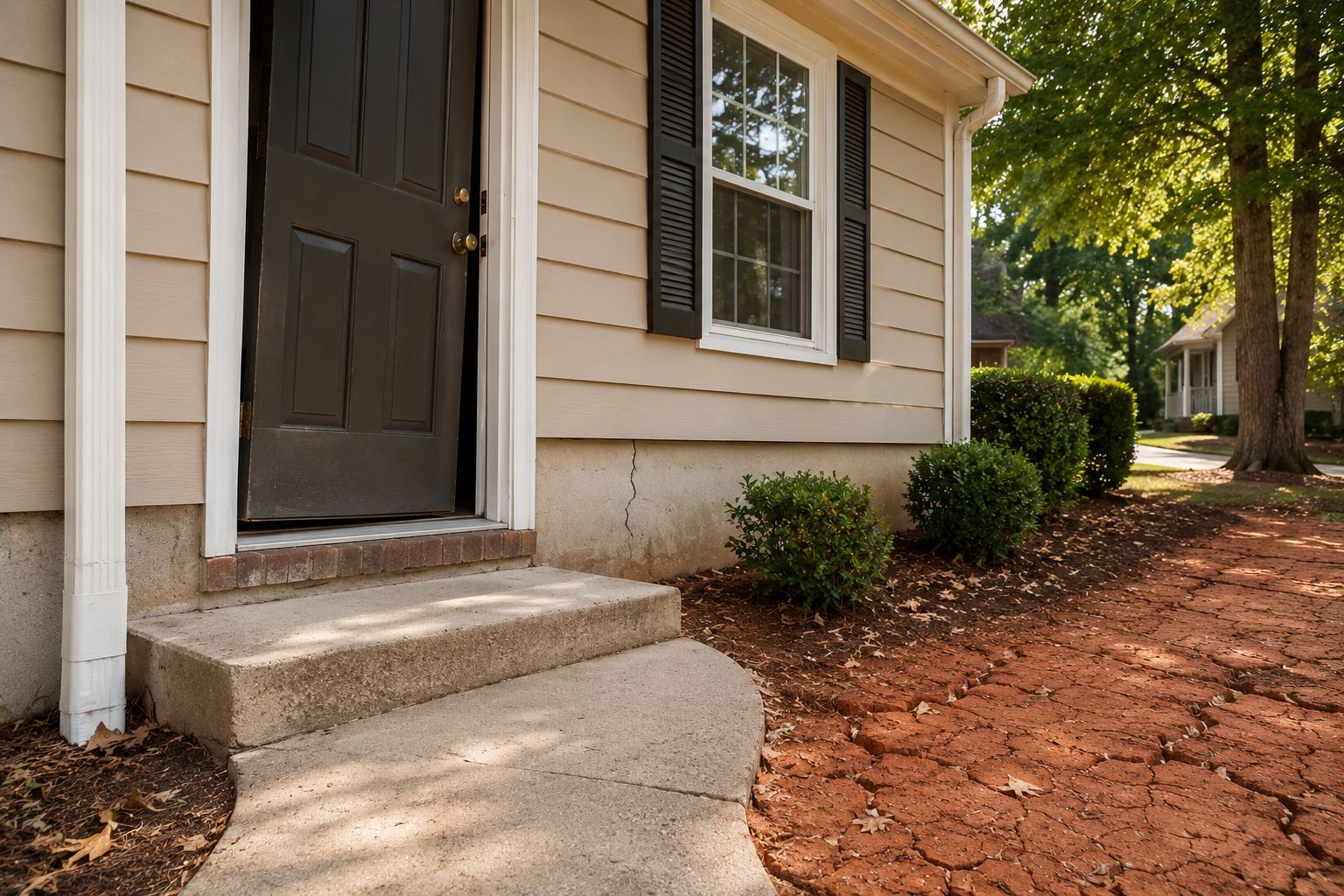
The opposite extreme causes its own damage. During drier stretches, the same clay shrinks and pulls away from the foundation, leaving gaps that the next heavy rain fills instantly, restarting the cycle. Over years, that repeated swelling and shrinking can shift a foundation's position, which is often what causes doors and windows to stick even when no single storm stands out as the cause.
Sloped lots add a further complication, since graded hillsides concentrate runoff toward specific points along a foundation rather than distributing it evenly. Identifying exactly where that flow hits the structure, not just noting that clay soil exists nearby, is what separates an effective drainage fix from one that simply relocates the same problem.
Our Services in Dahlonega, GA
What a Proper Crawlspace Encapsulation Involves for a Dahlonega, GA Home
Encapsulation means more than laying a sheet of plastic across bare crawlspace soil. A complete system seals the ground, walls, and often vents with a heavy, reinforced vapor barrier, cutting off the humid outside air and rising ground moisture that would otherwise condense on floor joists and subflooring, the exact conditions that let mold and wood rot take hold unnoticed.
Sealing alone doesn't finish the job if water still has a path into the space. Effective encapsulation pairs the vapor barrier with drainage, directing any water that does get past the exterior grading toward a sump system or gravity outlet rather than letting it pool under the vapor barrier where it can't be seen or addressed.
A dehumidifier often completes the system in especially humid climates, maintaining a stable moisture level even during the muggiest stretches of a Georgia summer. Done properly, encapsulation stops mold growth on joists, improves the air quality inside the home above, and takes pressure off a foundation that would otherwise sit in chronically damp soil.
Why Dahlonega Residents Trust Apex Waterproofing & Foundation Repair LLC
Reading how water actually moves through a property takes real experience, and Apex Waterproofing & Foundation Repair LLC is an expert waterproofing service in Dahlonega, GA built on exactly that kind of terrain-first diagnosis. Owner-operator Gio traces each property's specific water problem before recommending a fix rather than following a generic inspection checklist.
More than 10 years of hands-on work in north Georgia's clay and slopes means the team has already seen most of the ways local terrain causes trouble, from crawlspace humidity to foundation cracks tied to seasonal soil movement. That pattern recognition shortens the distance between a first inspection and an accurate diagnosis.
Being BBB accredited reflects the standard the business holds itself to on every project, and warranty-backed work means the person who diagnosed the problem stands behind the fix long after the crew leaves. Homeowners get straight answers about what a property actually needs, not an upsold list of services it doesn't.
Hire Us! Dependable Waterproofing Service in Dahlonega, GA
Owner-operator oversight keeps quality consistent from the first inspection through the final walk-through, and warranty-backed work means the fix is built to last rather than to simply pass a quick check. New construction projects get the same source-first approach, built into the foundation from day one rather than added after problems appear.
There is no advantage to waiting for the next heavy rain to make a damp crawlspace or a cracked foundation worse. Reach out today for an inspection, and find out exactly what your property's terrain and soil are doing to its foundation, along with a clear, practical plan to stop the damage for good.
Owner-operator oversight keeps quality consistent from the first inspection through the final walk-through, and warranty-backed work means the fix is built to last rather than to simply pass a quick check. New construction projects get the same source-first approach, built into the foundation from day one rather than added after problems appear.
There is no advantage to waiting for the next heavy rain to make a damp crawlspace or a cracked foundation worse. Reach out today for an inspection, and find out exactly what your property's terrain and soil are doing to its foundation, along with a clear, practical plan to stop the damage for good.
FAQS
1. Can foundation cracks be a normal part of a home settling, or are they always a concern?
Thin, vertical hairline cracks are common as concrete cures and settles and usually aren't urgent. Stair-step cracks, cracks wider than a pencil line, or cracks paired with sticking doors point to active movement that Apex Waterproofing & Foundation Repair LLC recommends having inspected.
2. Does landscaping or yard grading affect whether a home needs waterproofing?
Grading that slopes toward a foundation instead of away from it channels rainwater directly at the walls it's supposed to protect. Apex evaluates yard grading alongside the foundation itself, because fixing one without the other often leaves the underlying problem in place.
3. What's the difference between a sump pump and a French drain?
A sump pump collects water already inside and pumps it out, while a French drain intercepts water before it reaches the foundation and routes it away by gravity. Apex often recommends both together, since they solve different parts of the same problem.
4. How can I tell if crawlspace moisture is affecting my home's flooring?
Cupping or warping hardwood floors, a persistently musty smell in rooms above the crawlspace, and unusually high indoor humidity are common signs the space below needs attention. Apex Waterproofing & Foundation Repair LLC inspects crawlspaces directly rather than guessing from symptoms alone.
5. Is a wet basement always a foundation problem, or can it be something simpler?
Not always. A clogged gutter, a downspout dumping water too close to the house, or poor exterior grading can be the real culprit rather than the foundation itself. Apex traces the source before recommending a repair, saving a homeowner from an unnecessary fix.
6. Do vapor barriers wear out over time and need replacement?
Heavy-duty vapor barriers used in professional encapsulation are built to last, but punctures, sagging, or seam failures reduce their effectiveness. Apex inspects existing systems and repairs or replaces sections that have failed rather than assuming an older barrier still works.
7. Can new construction on a hillside lot avoid future waterproofing problems entirely?
Building drainage and moisture control into the foundation early goes a long way, though no lot is fully immune to north Georgia's rainfall and clay. Apex works directly with builders on new construction to reduce future risk as much as the site allows.
8. What should I do if I notice a new crack or damp spot after a heavy storm?
Take a photo to track whether it changes over time, and avoid patching it yourself with a quick sealant that can mask a bigger problem. Reach out to schedule an inspection so the actual cause gets identified before it's covered up.